Which Corrugated Boxes Are Best for Packing in 2026?
Which corrugated boxes for packing will perform best in 2026? The answer depends on the product, shipping route, and handling—not just board thickness. A compact single-wall box may protect books or folded clothing. Fragile glassware, heavy tools, or long-distance shipments may need stronger board, internal dividers, or cushioning. Fit matters, too. A box with too much empty space can let products shift and arrive damaged.
Industry data helps explain why the choice matters. FEFCO’s 2023 European Database reports 49.6 billion square metres of corrugated board production across Europe. The U.S. Environmental Protection Agency’s 2018 materials report recorded 33.3 million tons of corrugated boxes generated and a 96.5% recycling rate. These figures show the material’s scale and recovery potential, but they do not prove that every box is sustainable or suitable. Design and use still matter.
Packaging technologist Walter Soroka defines packaging as “a coordinated system of preparing goods for transport, warehousing, logistics, sale, and end use.” His definition is not specific to corrugated boxes, but it offers a practical lens: protection must work through the whole journey. A box can look sturdy on a packing bench and still fail after repeated drops or damp storage. That detail is easy to overlook. This guide compares common box styles, wall constructions, and fit considerations so you can match protection to the shipment. We will also flag where standard recommendations may fall short. Industry averages cannot replace testing your actual product and route.
Understanding Corrugated Board and Its Role in Packing
Corrugated board is more than folded paper. It sandwiches a fluted inner layer between flat liners, creating a lightweight structure that resists crushing and absorbs knocks. The flute height and shape affect cushioning, stiffness, and print surface. Single-wall board suits many everyday parcels; double-wall board adds support for heavier loads or longer storage. FEFCO’s 2023 Key Statistics report records about 52.6 billion square metres of European corrugated production. That scale reflects its practical role in packing, not proof that every box is right for every item.
For a packed carton, check board strength against the item’s weight, dimensions, and journey. Edge crush test (ECT) values indicate resistance to stacking pressure, while burst strength describes resistance to punctures and pressure. They measure different things. A tall box holding dense goods may need stronger stacking performance; a fragile ceramic piece needs snug cushioning and limited movement. Small gaps matter. A quick test is to pack a sample, close the flaps, and gently shake it. If contents slide, add fitted padding or choose a smaller box. I would not rely on wall count alone: moisture, rough handling, and poor fit can undo a seemingly sturdy choice. The right board is the one that protects the contents without adding needless material.
Comparing Common Corrugated Box Styles
Corrugated boxes differ in how they close, protect, and use space. The regular slotted container, or RSC, is the familiar choice: four flaps meet at the center. It suits books, pantry goods, and many uniform products. Its simple shape is easy to store flat and tape shut. For heavy contents, though, the bottom seam and board strength need careful checking.
A full-overlap box has outer flaps that cover the entire top and bottom. That extra layer can help protect broad surfaces during stacking or rough handling. It also uses more material and may take longer to assemble. A half-slotted container has no top flaps, so it works well with a separate lid for items that need frequent access. Telescoping boxes use a separate top and bottom, offering adjustable depth for irregular or delicate products. Not always the quickest option.
Die-cut mailers fold into a self-locking shape, often with built-in side panels that reduce movement around small items. They can look tidy, but fit matters: too much empty space invites shifting, while an overly tight fit can strain corners. A small detail. Before choosing a style for 2026 shipments, compare product dimensions, packed weight, stacking needs, and packing speed. Test a filled sample; a box that looks sturdy on a desk may behave differently in transit.
Which Corrugated Boxes Are Best for Packing in 2026?
Comparing common FEFCO box styles by the number of corrugated blanks used in their typical construction.
How to read this: FEFCO 0201 (regular slotted container), 0203 (overlap slotted container), and 0427 (one-piece folder) are typically made from one blank; FEFCO 0301 (telescope box) uses two separate pieces. Choose a style to suit the product and packing process: the blank count alone does not determine protection, which also depends on board grade, box dimensions, and packing conditions.
Matching Box Strength to Product Weight and Fragility
Which Corrugated Boxes Are Best for Packing in 2026?
Matching Box Strength to Product Weight and Fragility
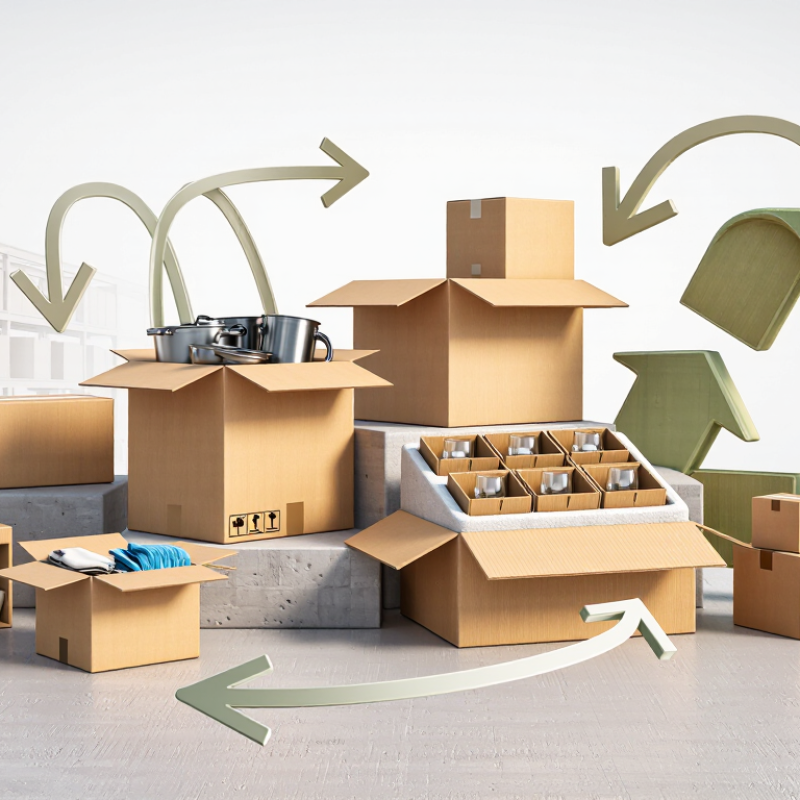
The right box depends on both weight and what could break inside. Corrugated board uses fluted layers to absorb knocks and resist crushing. A lightweight sweater may travel safely in a single-wall box. A heavy pan or a stack of books usually needs stronger board and a snug fit. Check the box’s weight rating, but remember that the contents and packing materials count toward the total load.
Fragile items need more than a sturdy outer shell. Glassware, for example, should have cushioning between pieces and around the sides, with little room to shift. Heavier products can crush delicate items if packed together, so separate them or use internal dividers. For long journeys or repeated handling, double-wall boxes can offer extra protection. Still, stronger is not always better: an oversized box can let contents move, while excess empty space adds avoidable material. The tricky part is getting the fit right. A simple test pack can expose weak corners or movement before shipping.
Tips: Lift a packed box from the bottom; watch for bowing. Press gently on its top panels. If they flex toward the contents, add support or choose stronger board. Recheck after sealing. It is easy to miss a loose corner.
Choosing Box Size, Flute Type, and Protective Features
Which Corrugated Boxes Are Best for Packing in 2026?
Choose a box by its inside dimensions, not its outside appearance. A snug fit leaves room for cushioning without letting items slide into the corners. For fragile goods, allow space for padding on every side; for dense items, avoid oversized boxes that become awkward to lift. The right size also reduces wasted material. Small detail, big difference.
Flute type affects cushioning, stacking strength, and box thickness. E-flute suits compact packages where a smooth surface matters, while B- or C-flute can offer more cushioning and rigidity. Double-wall board may help with heavier loads, but it adds bulk and is not automatically the safest choice. Match the board to the product’s weight, shape, and journey. Dividers help separate multiple items, and corner pads can protect edges. Moisture-resistant treatments may be useful in damp conditions, though they can affect recycling options.
Tips: Test one packed box before ordering in quantity. Give it a gentle shake; contents should not shift. Check that seams stay closed and corners do not crush under stacking. I would not trust a flute chart alone: actual results depend on board quality, packing, and handling. A slightly imperfect test pack can reveal what a tidy specification misses.
Evaluating Sustainable and Cost-Effective Options for 2026
In 2026, the best packing box is rarely the thickest one; it is the lightest grade that safely protects the item. Match board strength to weight, stacking time, and route. For books or pantry goods, single-wall corrugated board often works well. Fragile ceramics and long warehouse storage may need double-wall construction. Extra layers add cost and shipping weight, so avoid buying strength you cannot use. That sounds obvious.
Recycled-content board can reduce demand for virgin fiber, while right-sized cartons cut void fill and transport volume. Ask suppliers for recycled-content details and check the box’s edge-crush or burst rating against your load. Test a packed sample with real items, tape, and a modest drop before ordering in bulk. Paper-based cushioning is easy to sort in many local systems, but recycling rules differ. Check locally.
Cost is more than the price per carton. Include tape, labor, damage risk, storage space, and freight in the comparison. Lightweight board may lower freight, yet a weak bottom panel can erase those savings after one damp delivery. Corrugated board also loses strength when wet, an inconvenient limitation that packaging estimates can underplay. Choose a practical grade, measure the packed box, and revisit the choice when products or routes change.