Why Are Corrugated Boxes Essential for Global Shipping?
Why Are Corrugated Boxes Essential for Global Shipping?
Every day, products cross oceans, borders, warehouses, and crowded city streets. Corrugated boxes protect them through this demanding journey. Their fluted inner layer absorbs shocks, while the outer liners resist compression, moisture, and rough handling. A properly designed box can arrive with clean edges, readable labels, and an intact product.
Dennis Colley, former president and CEO of the Fibre Box Association, described corrugated packaging as “a renewable, recyclable, and biodegradable material.” His perspective reflects the material’s practical value. Corrugated boxes are lightweight, stackable, printable, and adaptable to different product sizes. These features help companies use shipping space more efficiently and reduce unnecessary protective materials.
Still, the answer is not completely simple. A box does not become sustainable merely because it is recyclable. Excessive layers, poor sizing, wet storage, and repeated damage can weaken its environmental benefits. I have seen a small package arrive with nearly half its space empty. That feels wasteful. Better engineering matters.
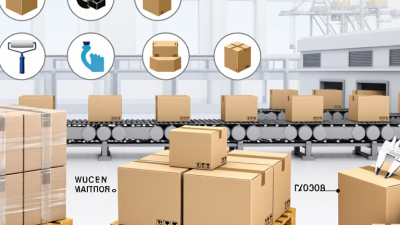
Global shipping also demands consistency. Boxes must withstand vibration, compression, changing temperatures, and hurried warehouse movement. Their standardized structure supports automated equipment and predictable pallet loading. This reliability helps manufacturers, retailers, carriers, and customers manage risk.
The humble box works hard.
For these reasons, corrugated boxes remain essential to modern international commerce. They combine protection, efficiency, communication, and recoverability in one widely available format. Their future depends on smarter design, responsible sourcing, and honest evaluation—not marketing claims alone.
What Corrugated Boxes Are and How They Are Made
Why Are Corrugated Boxes Essential for Global Shipping?
A corrugated box is more than folded cardboard. It contains flat linerboards and a fluted paper layer between them. The flutes create small air columns that improve cushioning and stacking strength. Different flute sizes support different shipping needs. Fine flutes suit small products, while larger flutes handle heavier loads. Box designers also consider product weight, dimensions, and expected handling conditions.
Manufacturing begins when paper rolls enter a corrugator. Heat and pressure shape one sheet into waves. Adhesive bonds the fluted sheet between linerboards. The finished board passes through cutting, creasing, and printing equipment. Manufacturers then fold and join the panels into usable boxes. Recycled fibers may reduce resource use, while stronger virgin fibers can improve performance. Neither option is perfect in every application.
Before shipment, professionals often check edge crush strength, compression resistance, and moisture tolerance. These tests help predict how a box may perform during storage and transport. In practice, the design is rarely perfect. Humidity can soften paper, and poor pallet stacking can damage strong boxes. A correctly sized box, suitable cushioning, and accurate sealing usually provide better protection across long shipping routes.
How Corrugated Boxes Protect Goods During Global Transit
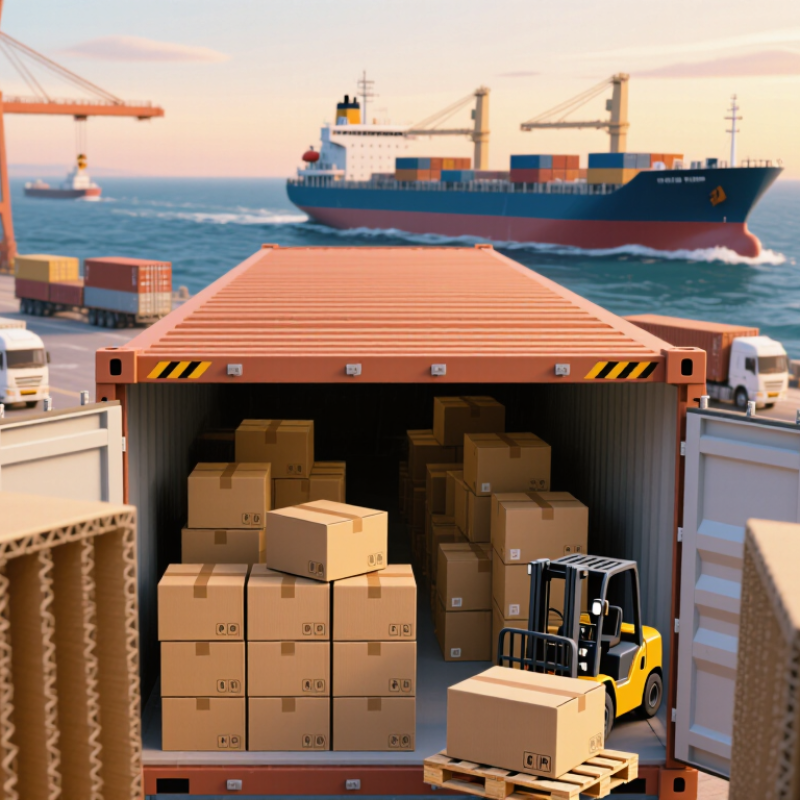
Corrugated boxes are essential because global shipping exposes goods to repeated shocks, compression, vibration, and humidity. UNCTAD’s Review of Maritime Transport reports that about 80% of world merchandise trade by volume moves by sea. A carton may wait on a damp dock, slide across a container floor, and face pressure from stacked cargo. Its fluted inner layer absorbs impact, while the outer liners distribute force around the product.
In warehouse handling, box strength matters more than appearance. A properly sized carton prevents empty space, reducing movement during truck and vessel transfers. Edge-crush strength helps cartons survive stacking, while moisture-resistant coatings support protection in humid routes.
The International Safe Transit Association recommends performance testing that simulates hazards such as drops, vibration, and compression. These tests are practical, not decorative. A box that survives a controlled drop still needs suitable internal cushioning.
Data also supports corrugated packaging’s resource value. The U.S. Environmental Protection Agency reported that paper and paperboard containers and packaging achieved a recycling rate of about 69% in 2018. However, recycled content alone cannot solve poor packaging design. A crushed corner, exposed seam, or oversized box can still cause failure. Packaging teams should inspect cartons after real shipments, not only trust laboratory results. That lesson is easy to miss. Corrugated material is strong, but it is not invincible. Resistant construction, accurate sizing, dry storage, and careful loading work together during global transit.
Why Corrugated Packaging Supports Efficient Shipping and Storage
Corrugated packaging does more than surround a product. Its fluted middle layer provides cushioning, stiffness, and moderate impact protection. In warehouse practice, that balance supports stable pallet stacking and smoother conveyor handling. Boxes also use standard footprints, helping workers fill truck and storage space efficiently. The Fibre Box Association reported more than 400 billion square feet of corrugated shipments in the United States during 2023. That scale reflects continuing demand for practical, lightweight transport packaging.
Storage efficiency depends on more than strength. Box dimensions should match the product, because empty space increases movement and wastes warehouse volume. Clear labeling and consistent sizes also reduce picking errors. The U.S. Environmental Protection Agency reported a paper and paperboard packaging recycling rate of 80.9% in 2018, with 26.9 million tons recovered. The figure is encouraging, although it should not excuse careless material choices. Recycling performance varies by local collection systems and contamination levels.
Corrugated boxes also help protect goods during long, repeated handling. A properly designed box can absorb compression from stacked cartons while keeping contents separated from rough surfaces. Moisture remains a weakness. Humid ports, cold storage rooms, and sudden temperature changes can reduce board strength. Not always. Shippers may overuse tape, fillers, or oversized cartons when testing is limited. Practical packaging trials, informed by box compression tests and distribution conditions, often reveal those hidden costs. The strongest design is not automatically the heaviest one.
How Box Design Meets Different International Shipping Requirements
Global shipping exposes corrugated boxes to long sea voyages, humid ports, warehouse stacking, and repeated handling. UNCTAD’s Review of Maritime Transport 2024 states that shipping carries over 80% of global merchandise trade by volume. Box design therefore needs more than attractive printing. It must manage compression, moisture, vibration, and changing climates.
Material selection starts with the route. A double-wall structure can protect heavy goods during extended stacking, while a lighter single-wall box may reduce freight weight for shorter journeys. Edge crush strength matters when pallets are stacked high. Moisture-resistant liners help in tropical ports, but they cannot replace inner protection. ISO 2233 conditioning tests can simulate humidity and temperature before compression testing.
Small details matter. A loose flap can become a failure point.
International handling also requires practical dimensions and clear markings. ISO 780 recommends recognizable symbols for handling instructions, reducing confusion across languages and logistics teams. The World Bank’s Logistics Performance Index 2023 highlights major differences in infrastructure, customs, and shipment reliability between countries. Boxes should tolerate those differences. Designers often add corner protection, tamper-evident closures, or cushioning for fragile contents. However, more material is not always better. Oversized cartons waste container space and increase movement inside the box. That assumption deserves review. Real route trials, drop tests, and customer feedback should guide the final design.
The Environmental and Economic Role of Corrugated Boxes in Trade
Corrugated boxes do more than hold goods during global shipping. They balance protection, weight, cost, and resource use across long supply chains. Their fluted paper structure absorbs shocks while keeping material relatively light. A lighter package can reduce fuel demand, especially when thousands of cartons travel by truck, rail, or ship. In warehouse operations, standard box sizes also improve pallet stability and reduce empty space.
Most corrugated fiber is recoverable through established paper-recycling systems, provided it stays dry and free from food residue. Recycled fibers can return to packaging production, lowering pressure on virgin forest resources. However, recycling is not automatically harmless. Collection, pulping, drying, and transport consume energy and water. A box used once may still have a larger footprint if it is oversized or shipped mostly empty. Better design matters. This system is useful, but not perfect.
Economically, corrugated packaging supports trade through widely available materials and simple converting equipment. Flat sheets store efficiently before assembly, helping exporters control warehouse space. Stronger grades protect products and reduce replacement costs, claims, and delivery delays. Yet more layers are not always better. Excess material raises purchase and disposal costs. The right carton depends on product weight, humidity, stacking height, and handling conditions. Small design errors can become expensive at scale. That deserves closer review.