
Top Industrial Packaging Boxes Manufacturers in China
China has become a major sourcing base for industrial packaging boxes, serving machinery, electronics, chemicals, automotive parts, and export logistics. The market is broad, but quality varies sharply between suppliers. Box strength, moisture resistance, printing accuracy, and export documentation can determine whether cargo arrives safely or damaged.
Smithers’ “The Future of Corrugated Packaging to 2029” identifies e-commerce, industrial distribution, and sustainability requirements as important growth drivers. Mordor Intelligence also forecasts continued expansion in the global corrugated packaging market through 2029. These reports suggest strong demand, yet market growth does not automatically guarantee reliable manufacturing. That part deserves scrutiny. Factory visits, compression tests, and sample approvals remain essential.
Eleni Despotou, Director General of FEFCO, has stated, “Corrugated packaging is the most recycled packaging material in Europe.” Her observation highlights a practical advantage of fiber-based packaging, but recyclability still depends on coatings, adhesives, inks, and local collection systems. Buyers should examine those details before accepting broad environmental claims.
This guide reviews leading Chinese manufacturers of industrial packaging boxes through measurable criteria. These include production capacity, material sourcing, box compression strength, customization capability, quality systems, and international delivery experience. It also considers whether suppliers can handle heavy machinery crates, pallet-sized cartons, honeycomb structures, and moisture-sensitive shipments. The best manufacturer is not always the largest. A smaller factory may offer faster engineering support, while a larger producer may provide stronger capacity and testing resources. Careful comparison is necessary.
Definition and Role of Industrial Packaging Boxes
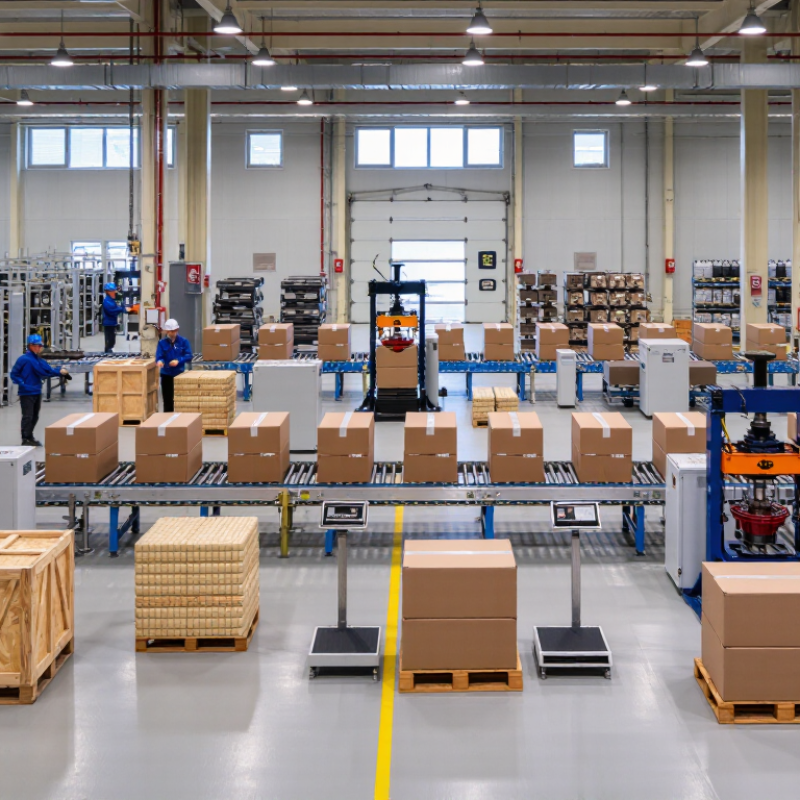
Industrial packaging boxes are engineered containers for moving, storing, and protecting heavy or sensitive goods. They include corrugated cartons, wooden cases, honeycomb boxes, and reinforced paperboard designs. Unlike retail packaging, they prioritize compression strength, stacking stability, moisture resistance, and handling efficiency.
Their role becomes clear on a warehouse floor. A 1.2-meter pallet may carry several hundred kilograms. Weak board can collapse during forklift movement or long-distance transport. Smithers’ 2024 corrugated packaging study projects the global market to exceed 200 billion US dollars before 2028. This growth reflects rising shipment volumes and stricter protection requirements. China remains a major manufacturing base, supported by large paper-converting capacity and mature export logistics. Yet market size does not guarantee dependable performance. A box may look strong and still fail at the corners.
Tips: Ask manufacturers for edge crush tests, burst strength results, and compression-test records. Match the box to product weight, stacking height, humidity, and transport duration. Request a sample packed with the real product. Small details matter. Poorly placed void space increases movement and damage. Excessive material, however, raises cost and shipping weight. The best design is not always the thickest one. It is the most balanced. Suppliers should also explain recycled content, moisture barriers, and quality-control procedures. These details support traceability and more reliable purchasing decisions.
Top Industrial Packaging Boxes Manufacturers in China - Definition and Role of Industrial Packaging Boxes
An overview of common industrial packaging box categories, materials, structural features, and their roles in storage, handling, and transport.
| Packaging Box Category | Definition | Primary Material | Typical Structural Features | Main Industrial Applications | Role in the Supply Chain | Key Selection Factors |
|---|---|---|---|---|---|---|
| Heavy-Duty Corrugated Boxes | Multi-layer paperboard boxes designed to protect products during handling, warehousing, and shipment. | Double-wall or triple-wall corrugated fiberboard | Fluted inner layers, reinforced corners, glued or stitched joints, and optional dividers. | Machinery parts, electrical equipment, automotive components, and bulk industrial goods. | Provides cushioning, stacking strength, and protection against routine compression and impacts. | Product weight, box dimensions, stacking height, flute grade, and shipping distance. |
| Wooden Crates | Rigid packaging structures assembled from timber or engineered wood panels for large or heavy products. | Solid wood, plywood, or oriented strand board | Cleated frames, nailed or screwed panels, internal bracing, and lifting points. | Industrial machinery, molds, pumps, motors, and oversized components. | Supports high loads and helps protect cargo from mechanical damage during domestic or export transport. | Gross weight, center of gravity, lifting method, moisture exposure, and export-treatment requirements. |
| Plywood Cases | Enclosed cases made mainly from plywood panels for stronger and more stable protection than standard fiberboard. | Plywood with timber framing or metal hardware | Panel construction, secure fasteners, removable lids, handles, and optional shock-absorption inserts. | Precision instruments, control cabinets, medical equipment, and sensitive machinery. | Offers dimensional stability and a closed protective enclosure for long-distance transport. | Sensitivity to vibration, required reuse, internal fit, closure system, and environmental conditions. |
| Plastic Industrial Boxes | Reusable rigid containers used for repeated movement, storage, and distribution of industrial products. | HDPE, polypropylene, or other industrial-grade polymers | Molded walls, reinforced ribs, stackable bases, hinged lids, and optional nesting geometry. | Automotive parts, electronic components, warehouse picking, and production-line handling. | Enables repeated handling, protects contents from moisture, and supports standardized internal logistics. | Reusability, load capacity, temperature range, cleaning needs, and compatibility with pallets or conveyors. |
| Metal Shipping Boxes | Durable containers manufactured for demanding environments and repeated transport cycles. | Steel, stainless steel, or aluminum | Welded or folded panels, reinforced frames, latches, lifting eyes, and corrosion-resistant finishes. | Heavy tools, defense-related equipment, industrial components, and high-value assets. | Provides high impact resistance, security, and long service life in harsh handling conditions. | Container weight, corrosion exposure, security level, lifting requirements, and return logistics. |
| Honeycomb Paperboard Boxes | Lightweight protective boxes that use a honeycomb paper core to increase stiffness with low material weight. | Recycled paperboard and kraft paper | Cellular core, laminated faces, custom-cut inserts, and edge protection components. | Flat panels, furniture parts, glass products, doors, and lightweight industrial assemblies. | Reduces packaging weight while providing separation, surface protection, and moderate cushioning. | Required stiffness, moisture exposure, panel size, product fragility, and recycling objectives. |
| UN-Certified Dangerous Goods Boxes | Packaging designed and tested for specific hazardous materials under applicable transport regulations. | Approved fiberboard, plastic, or combination packaging materials | Specified performance levels, inner receptacles, cushioning, closures, and required hazard markings. | Batteries, chemicals, laboratory materials, paints, and other regulated substances. | Controls leakage, breakage, and exposure risks when used according to the relevant regulations. | UN specification, packing group, substance classification, transport mode, and labeling obligations. |
| Custom Export Packaging Boxes | Project-specific packaging engineered around product geometry, transport conditions, and destination requirements. | Wood, plywood, corrugated board, plastic, metal, or hybrid materials | Custom blocking and bracing, moisture barriers, shock indicators, desiccants, and handling labels. | Export machinery, complete production lines, sensitive equipment, and oversized cargo. | Integrates protection, container loading, handling efficiency, and compliance for international shipments. | Route conditions, cargo dimensions, climate, handling equipment, destination rules, and total packaging cost. |
Related Posts
-

Harnessing Supply Boxes Trends at the 138th Canton Fair in 2025 for Industry Growth
-

How to Choose the Best Shipping Packaging Boxes for Your Needs?
-

Top Tips for Creative Boxes to Boost Your Brand?
-

How to Choose the Right Manufacturing Corrugated Boxes?
-

Why Creative Boxes Are Revolutionizing Packaging in the E Commerce Industry
-

10 Best Reusable Packaging Boxes for Global Shipping