
Top 10 Types of Shipping Packaging Boxes for Global Buyers
Choosing the right shipping packaging boxes can determine whether products arrive safely or damaged. A crushed corner, loose insert, or weak seam may create costly returns. Global buyers therefore need more than attractive packaging. They need boxes matched to product weight, dimensions, handling conditions, and delivery distance.
This guide explores ten practical box types used across international supply chains. It covers corrugated cartons, mailer boxes, rigid boxes, folding cartons, kraft boxes, insulated boxes, and specialty designs. Each option offers different protection, branding, storage, and cost advantages. A small electronics seller may need foam inserts and anti-static protection. A clothing brand might prefer lightweight mailers with tear strips. A food exporter may require moisture-resistant materials and careful temperature planning.
Details matter.
Box strength should reflect stacking pressure, vibration, and repeated handling. Buyers should check board grade, flute type, closure design, and internal fit before placing large orders. Samples and drop tests can reveal weaknesses that product photos hide. That lesson is easy to overlook. Even experienced purchasing teams sometimes choose a box based mainly on price, then discover higher damage rates later.
There is no universal best box. Supplier quality, regional conditions, product fragility, and fulfillment methods all influence the final choice. Responsible packaging decisions should also consider recyclable materials, accurate labeling, and applicable import requirements. The following comparison aims to support clearer decisions, while recognizing that real-world testing remains essential. Boxes fail sometimes. Good planning reduces the risk.
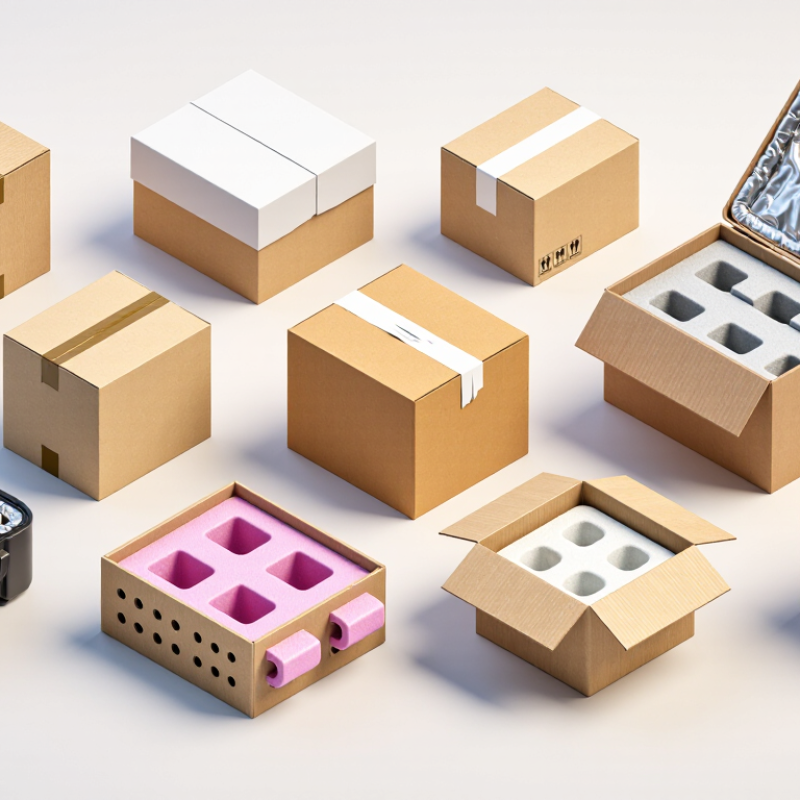
Corrugated RSC and Mailer Boxes: 3-, 5-, and 7-Ply Board (FBA)
For global buyers, corrugated shipping boxes must survive more than a warehouse shelf. They face stacking, vibration, humidity, and rough transfers across several transport stages. Regular Slotted Cartons, or RSC boxes, remain practical because their flaps close quickly and seal efficiently. A 3-ply board suits lightweight garments, books, and small household goods. It reduces material use but weakens sooner under concentrated pressure.
Five-ply board offers a stronger balance for ceramic items, tools, and mixed product loads. Its two fluted layers improve compression resistance and cushioning around edge impacts. Seven-ply board is designed for heavy equipment, dense cargo, and repeated handling. However, thicker board adds weight, storage volume, and shipping cost. That trade-off is easy to underestimate. For FBA shipments, accurate carton dimensions, barcode placement, and weight control can prevent receiving delays. A box should close without bulging. Overfilled cartons often fail before the outer wall shows damage.
Mailer boxes use integrated flaps and locking tabs, making them suitable for apparel, cosmetics, and compact retail orders. They create a cleaner unboxing experience than standard RSC cartons. Yet mailers need careful sizing; empty space allows products to slide and strike corners. Fit matters. In my packaging tests, a smaller 5-ply mailer sometimes protected better than a loose 7-ply carton. The result depends on fit, inserts, moisture exposure, and drop height. No specification should be accepted without a sample test. I would also retest after humid storage, because dry-board results can be misleading.
Top 10 Types of Shipping Packaging Boxes for Global Buyers - Corrugated RSC and Mailer Boxes: 3-, 5-, and 7-Ply Board (FBA)
| No. | Box Type | Typical Board Construction | Best-Suited Products | Main Protection Feature | Closure Method | Typical Shipping Role | FBA Suitability |
|---|---|---|---|---|---|---|---|
| 1 | Regular Slotted Container (RSC) | Usually 3-ply for light-to-medium loads; 5-ply for heavier products | General merchandise, household goods, packaged products | Efficient stacking and reliable edge-to-edge compression strength | Top flaps sealed with pressure-sensitive tape or strapping | Most common shipping carton for domestic and export transport | High, when correctly sized, sealed, and sufficiently protective |
| 2 | Die-Cut Mailer Box | Generally single-wall 3-ply corrugated board | Small accessories, cosmetics, books, apparel, and subscription items | Close-fitting design reduces product movement and void space | Integrated tuck flap, locking tabs, or tear strip | Direct-to-consumer parcel and small-item fulfillment | High for durable products that fit the internal dimensions |
| 3 | Full Overlap Slotted Box (FOL) | Commonly 5-ply; 3-ply may be used for lighter contents | Wide, flat, or moderately heavy products | Overlapping flaps provide extra top and bottom cushioning | Tape, adhesive, or strapping over overlapping flaps | Heavy-duty distribution and palletized export shipments | High for products requiring stronger base and closure support |
| 4 | Half-Slotted Container (HSC) | Usually 3-ply or 5-ply corrugated board | Bulk items, open-display products, and warehouse-ready goods | Open top allows quick access while the base supports the load | Open top, lid, tray, or separate cover | Storage, retail replenishment, and internal handling | Moderate; usually needs a secure lid or outer shipping carton |
| 5 | One-Piece Folder Box | Typically 3-ply corrugated board with scored folding panels | Flat products, documents, framed items, and low-profile goods | Multiple panels wrap around the product for surface protection | Tuck-in flaps, locking tabs, or tape | Flat parcel shipping and compact e-commerce orders | High for non-fragile products with suitable internal protection |
| 6 | Bookfold Mailer | Usually 3-ply corrugated board with several crease positions | Books, electronics, accessories, samples, and compact retail goods | Adjustable folds help create a snug fit around different product heights | Tuck flap, locking tab, adhesive strip, or tear strip | Small parcel fulfillment and presentation-focused delivery | High for compact, lightweight, and moderately durable products |
| 7 | Roll-End Tuck-Top Mailer | Generally 3-ply corrugated board, often with reinforced side walls | Premium consumer goods, apparel, gift sets, and small devices | Roll-end construction improves corner stability and presentation | Integrated tuck top with locking side flaps | Direct-to-consumer shipping where easy opening is important | High for appropriately protected, non-hazardous products |
| 8 | Double-Wall Heavy-Duty Box | 5-ply corrugated board with two fluting layers | Appliances, tools, dense products, and multi-item shipments | Higher puncture resistance and stacking strength than single-wall board | Tape, reinforced tape, or strapping | Long-distance transport, pallet loads, and heavier parcels | Very high when box size and total package weight are properly controlled |
| 9 | Triple-Wall Industrial Box | 7-ply corrugated board with three fluting layers | Very heavy, oversized, dense, or high-value industrial products | Maximum cushioning, compression, and puncture resistance among standard corrugated options | Heavy-duty tape, strapping, or reinforced closure systems | Industrial export shipping and demanding multi-stage handling | Limited; suitable only where product size and fulfillment limits permit |
| 10 | Partitioned or Cell-Style Box | Outer box commonly 3-ply or 5-ply with corrugated dividers | Glassware, bottles, jars, components, and multiple fragile units | Individual cells limit contact, vibration, and product-to-product impact | Standard flaps sealed with tape; dividers are assembled inside | Multi-unit shipping and fragile-product distribution | High when dividers and additional cushioning match the product profile |
Related Posts
-

Why Choose Shipping Boxes for Home Delivery Worldwide?
-

Top Tips for Choosing Shipping Boxes for Home Use?
-

What Is Shipping Box Supplies for Global Buyers?
-

2026 How to Choose the Best Shipping Boxes for Home Use?
-

2025 Top 10 Shipping Box Supplies You Need for Your Business Success
-

2026 How to Choose the Best Shipping Boxes for Home Use?