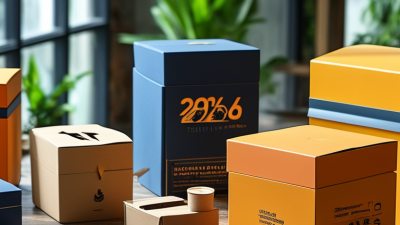
Choosing among China’s top 10 shipping boxes manufacturers requires more than comparing factory prices. A reliable supplier must understand box strength, product weight, stacking pressure, moisture exposure, and delivery conditions. The right shipping boxes manufacturer should also provide clear material specifications, accurate samples, stable production, and practical quality controls. Ask about corrugated flute types, paper grades, edge crush strength, burst strength, and printing consistency. These details matter when cartons travel through warehouses, trucks, and crowded delivery networks.
Walter Soroka, a respected packaging technology author, defines packaging as “the art, science, and technology of enclosing and protecting products for distribution, storage, sale, and use.” His words explain why appearance alone cannot guide this decision. A bright printed carton may still collapse under pressure. That mistake can become expensive.
Experience matters here.
This guide compares China’s leading suppliers through manufacturing capacity, customization ability, testing procedures, communication, and export experience. It also considers smaller factories that may offer flexibility but lack advanced testing equipment. That weakness should not be ignored. Buyers should request recent product samples, inspection records, factory videos, and references from comparable industries. Certifications can support trust, but documents should be checked carefully.
No supplier fits every business.
A food brand may need clean materials and strong moisture resistance. An electronics company may prioritize precise dimensions and protective inserts. A furniture seller may require oversized cartons with reinforced corners. The best choice depends on the product, shipping route, budget, and expected order volume. This comparison aims to make that evaluation clearer, while recognizing one uncomfortable truth: the cheapest quotation can create the highest total cost.
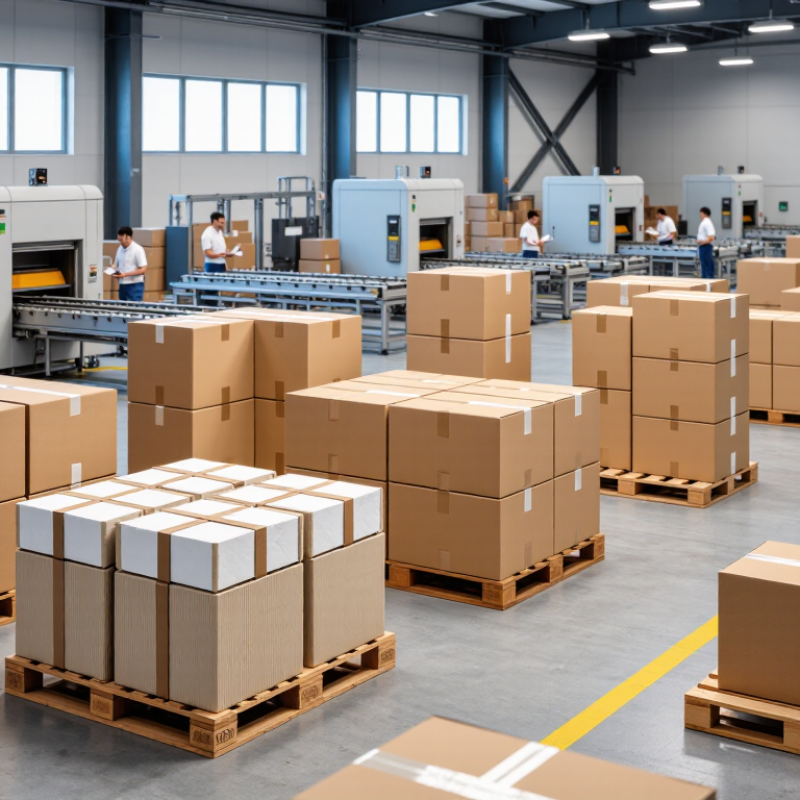
Shipping boxes are protective containers designed to move products safely through warehouses, trucks, and delivery networks. Most are made from corrugated paperboard, with fluted layers between outer sheets. These layers absorb impacts and reduce crushing during handling.
A box is not simply a printed carton. Its strength depends on board grade, flute profile, dimensions, and moisture resistance. A small electronic item may need cushioning and a tight fit. A heavy ceramic product may require stronger walls and reinforced corners. Oversized boxes can increase shipping costs and allow products to shift during transport. Small details matter.
Manufacturer choice matters because production quality directly affects damage rates, customer satisfaction, and operating costs. Experienced manufacturers should explain edge crush strength, box compression testing, and material specifications clearly. They should provide samples before mass production. A practical check includes drop testing, stacking tests, and inspection after exposure to humidity. Ask for consistent dimensions, traceable material records, and a clear quality-control process.
Price alone can mislead buyers. A cheaper box may use weaker paper or inconsistent sizing. That saving can disappear after returns and replacements. No factory is perfect, however. Even a reliable supplier may miss a printing detail or produce a weak batch. This is why written standards, pre-shipment inspections, and open communication remain necessary. I would also review production capacity carefully, because impressive samples do not always reflect everyday output.
China Top 10 Shipping Boxes Manufacturers: How to Choose?
Identifying China’s top ten shipping box manufacturers requires more than comparing online rankings. Start with verifiable factory information, production capacity, and export experience. A reliable supplier should provide a business license, factory address, material specifications, and recent product samples. Ask whether the factory controls printing, cutting, folding, and quality inspection in-house. This can reveal hidden outsourcing risks.
Evaluate box strength through practical testing. Check edge crush strength, burst resistance, moisture performance, and load capacity. Request samples with your actual dimensions and packing method. Inspect corner compression, glue lines, print accuracy, and folding alignment. A professional manufacturer should explain its testing process clearly. It should also recommend suitable paper grades instead of pushing the most expensive option. Pricing matters, but an unusually low quotation may exclude tooling, packaging, or inspection costs. That detail is easy to miss.
Tips: Compare at least five suppliers before selecting ten finalists. Request a written quotation with material grade, dimensions, tolerance, lead time, and replacement terms. Review factory audit records and customer references when available. Video tours help, but they are not perfect. An in-person audit or independent inspection is stronger. Also assess communication speed and technical understanding. A supplier that answers vague questions poorly may create costly production mistakes later. No checklist is flawless. Recheck critical details before payment and mass production.
When comparing China’s top 10 shipping box manufacturers, quality should be measured, not guessed. Request samples with the same board grade, dimensions, and printing used in production. Compare edge crush test (ECT), bursting strength, and compression performance. These figures show how boxes may handle stacking and transport. Also check board thickness, flute type, moisture resistance, and dimensional tolerance. A clean surface matters, but strength matters more.
Customization requires equal attention. Confirm the internal size, closure style, handle design, ink coverage, and protective coating. Ask whether the supplier can maintain color consistency across large orders. Review a pre-production sample before approving mass production. Packaging experts should also verify carton weight and pallet patterns, because small design changes can affect shipping efficiency. Factory audits, documented inspection procedures, and traceable quality records provide stronger evidence than attractive product photos.
Tips: Compare at least three samples under similar conditions. Test filled boxes for stacking, vibration, and corner impact. Ask how defects are classified and reported. Do not rely only on a laboratory certificate. I have seen impressive samples hide weak seams and uneven folds. That risk deserves attention. A realistic tolerance should be agreed in writing, although many buyers overlook it. Recheck the final artwork, dimensions, and packing method before shipment. Supplier communication can still fail, even with a clear specification.
Choosing among China’s top shipping box manufacturers requires more than comparing unit prices. Request an itemized quote covering board grade, box dimensions, printing, tooling, minimum order quantity, packaging, and freight. A low price may hide thinner paper or higher production waste. Ask for a physical sample and test its compression strength with a loaded carton.
Production capacity should match your shipping schedule, not just your forecast. Confirm machine types, daily output, working shifts, and typical lead times. Ask how the factory handles seasonal demand and equipment maintenance. A capable supplier should provide recent production records, quality-control procedures, and a clear plan for urgent replenishment. I would not trust capacity claims without evidence.
Certifications need careful review. Check whether ISO 9001, FSC, recycled-content, or other certificates apply to the actual factory and product. Verify certificate numbers, issue dates, scope, and independent verification details. A document alone proves little. Request material test reports, sample inspection records, and corrective-action reports for failed batches. If possible, arrange a factory audit or third-party inspection before shipment. This step is often skipped. That can be costly. Compare payment terms, defect allowances, replacement procedures, and communication response times. A supplier with slightly higher pricing may offer more dependable quality and fewer delivery disruptions. Still, every claim should be tested against samples, records, and written terms.
| Supplier Profile | Typical Production Scale | Annual Corrugated Capacity | Typical MOQ | Standard Lead Time | FOB Price Reference* | Certification Evidence to Request | Quality and Compliance Indicators | Best Fit |
|---|---|---|---|---|---|---|---|---|
| Profile 01 Large-scale |
Integrated paper mill and box plant with automated converting lines | More than 300 million m²/year | 50,000–100,000 pieces | 18–30 calendar days | US$0.18–0.28/unit | ISO 9001; ISO 14001; FSC Chain of Custody where claimed; factory audit records | Automated flexographic printing, inline inspection, documented process controls | High-volume retail, e-commerce, and export programs |
| Profile 02 Large-scale |
Multi-site manufacturer serving domestic and export customers | 200–300 million m²/year | 30,000–80,000 pieces | 15–28 calendar days | US$0.19–0.30/unit | ISO 9001; ISO 14001; FSC documentation; packaging safety declarations | Color management, burst-strength testing, moisture control, palletized shipment | Stable repeat orders requiring dependable capacity |
| Profile 03 Large-scale |
High-speed plant focused on standard shipping carton formats | 150–250 million m²/year | 25,000–60,000 pieces | 14–25 calendar days | US$0.20–0.32/unit | ISO 9001; FSC certificate number verification; supplier social-compliance audit | ECT or burst testing, compression testing, barcode or print verification | Standardized cartons with predictable monthly demand |
| Profile 04 Mid-scale |
Regional corrugated converter with flexible production scheduling | 80–150 million m²/year | 10,000–30,000 pieces | 15–30 calendar days | US$0.22–0.36/unit | ISO 9001 preferred; FSC available by material; recent third-party audit report | Lot-based sampling, edge-crush testing, die-cut accuracy checks | Small and medium e-commerce brands |
| Profile 05 Mid-scale |
Custom packaging producer specializing in printed and die-cut boxes | 60–120 million m²/year | 5,000–20,000 pieces | 18–35 calendar days | US$0.24–0.40/unit | ISO 9001; FSC or recycled-content documentation when specified; material test reports | Pre-production samples, print proof approval, dimensional inspection | Custom designs and moderate order volumes |
| Profile 06 Mid-scale |
Export-oriented plant with container-loading and documentation experience | 50–100 million m²/year | 10,000–25,000 pieces | 20–35 calendar days | US$0.23–0.38/unit | ISO 9001; FSC verification if advertised; export packaging compliance documents | Moisture-resistant storage, export-grade palletization, carton drop testing | International buyers consolidating regular shipments |
| Profile 07 Small to mid-scale |
Flexible factory producing short runs and multiple box dimensions | 25–70 million m²/year | 2,000–10,000 pieces | 20–40 calendar days | US$0.27–0.45/unit | ISO 9001 recommended; supplier questionnaire; material and ink declarations | Manual sampling, prototype approval, basic compression and burst testing | Start-ups, product testing, and seasonal packaging |
| Profile 08 Specialist |
Manufacturer focused on heavy-duty, double-wall, or reinforced cartons | 30–80 million m²/year | 3,000–15,000 pieces | 22–40 calendar days | US$0.35–0.70/unit | ISO 9001; verified board grade; test reports for ECT, burst, compression, and stacking | Higher grammage board, edge protection, drop testing, load-performance records | Heavy, fragile, or long-distance shipments |
| Profile 09 Sustainable-packaging |
Plant offering recycled-fiber and reduced-ink packaging options | 30–100 million m²/year | 5,000–20,000 pieces | 20–38 calendar days | US$0.25–0.44/unit | FSC Chain of Custody when applicable; ISO 14001 preferred; recycled-content evidence | Fiber-origin traceability, water-based ink options, waste and energy records | Brands with documented sustainability requirements |
| Profile 10 Low-volume specialist |
Small factory or contract converter focused on prototypes and short runs | Below 30 million m²/year | 500–5,000 pieces | 25–45 calendar days | US$0.32–0.65/unit | Quality manual, product test reports, traceable raw-material records, audit access | Prototype capability, manual inspection, flexible artwork and size changes | New product launches and low-volume customized orders |
*Pricing basis: Reference ranges are market-evaluation benchmarks for a standard single-wall or five-ply regular slotted carton, approximately 300 × 200 × 150 mm, one- or two-color printing, flat-packed, FOB China. Actual quotations vary by board grade, paper prices, dimensions, printing, tooling, order quantity, packing method, exchange rates, and shipping terms.
How to evaluate: Request a dated quotation, production-capacity statement, pre-production sample, recent ECT or burst-strength test report, applicable ISO or FSC certificate number, corrective-action records, and a clear lead-time commitment before ranking suppliers.
Choosing the best shipping box manufacturer requires more than comparing unit prices. Check production experience, material testing, and delivery records. A reliable supplier should provide box compression test results, moisture resistance details, and clear tolerances. Ask whether the factory follows recognized standards, such as ISO 9001 or ISTA packaging procedures. These details matter when boxes face stacked pallets, humid warehouses, and rough last-mile handling.
Smithers’ packaging research identifies e-commerce and lightweighting as major drivers in the corrugated packaging market. The OECD also reports that packaging represents about 40% of global plastic use, increasing pressure for recyclable and efficient designs. Request recycled-content figures, fiber sourcing information, and waste-control data. Do not accept vague claims. I once underestimated flute strength because the sample looked perfect on a clean desk. Real transport was less forgiving.
Tips: Send the manufacturer your product dimensions, weight, stacking method, and destination climate. Request three samples, not one. Test them with realistic loading, vibration, and compression. Compare total landed cost, including tooling, inspection, damaged goods, and delivery delays. A slightly cheaper box can become expensive after one crushed shipment. Review communication speed, corrective-action records, and production capacity before signing. Confirm whether the supplier can scale during seasonal peaks without changing paper grade. Use an independent inspection when the order is important. It is not excessive; it is practical risk control.