
How to Choose Thick Paper Tubes in 2026?
Choosing Thick Paper Tubes in 2026 requires more than comparing wall thickness or price. Packaging buyers must examine strength, moisture resistance, inner diameter, surface finish, and end-use conditions. A tube that protects posters may fail under heavy textile rolls. A tube for shipping documents may need different compression performance. Small details matter.
In practical packaging evaluations, begin with the product’s weight, length, storage period, and transport environment. Ask suppliers for measured wall thickness, burst resistance, compression data, and production tolerances. Samples should be tested with realistic loads, not displayed empty on a showroom shelf. Check whether the paperboard uses recycled fibers, responsibly sourced materials, or suitable protective coatings. Sustainability claims need evidence. Request certifications, test reports, and traceable manufacturing information.
Supplier experience also deserves attention. Reliable manufacturers explain their winding methods, adhesive choices, moisture controls, and quality inspections clearly. They should discuss custom sizing without hiding limitations. A perfect specification on paper can still perform poorly in humid warehouses or crowded delivery trucks. This is easy to underestimate.
No selection method is flawless. Real conditions change. That is why trial orders, drop tests, and compression checks remain valuable in 2026. Buyers should compare total performance, not only the lowest quotation. The right Thick Paper Tubes balance protection, efficiency, appearance, and responsible material use. Careful questions often prevent expensive packaging failures later.
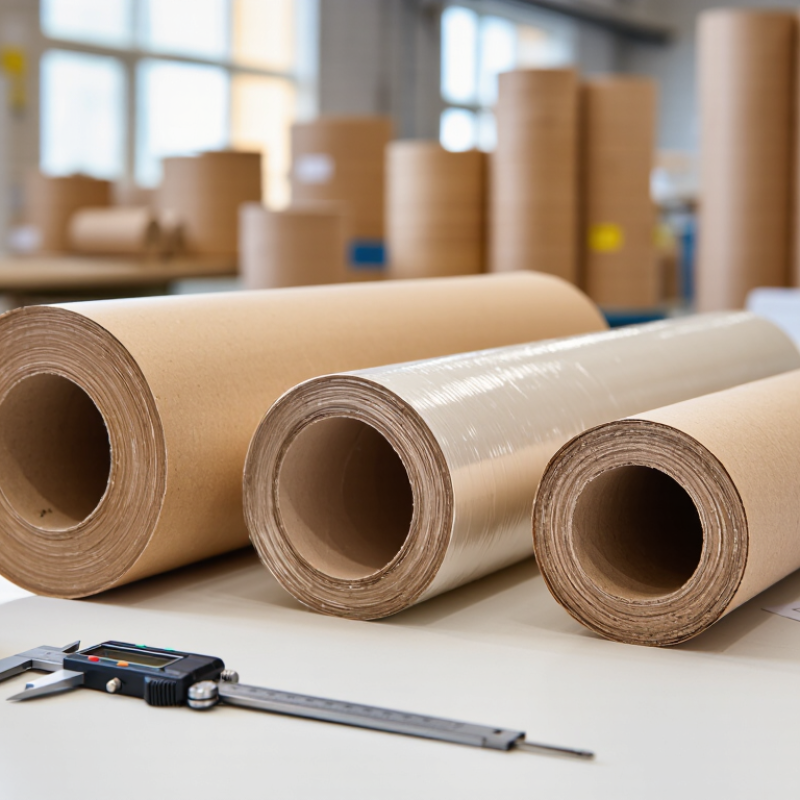
Define Tube Requirements: Diameter, Length, Load, and Wall Thickness
How to Choose Thick Paper Tubes in 2026?
Define the tube’s inner diameter before discussing wall thickness. It must fit the material without crushing edges or creating excess movement. Measure the required length from the actual winding or packaging setup. Add only enough clearance for handling. Too much space can cause shifting during transport.
Load requirements need practical detail. Record the product weight, stacking height, lifting method, and expected storage time. A tube supporting a heavy roll needs different strength from one used for light protective packaging. Consider both axial compression and radial pressure. Moisture also matters, because damp paper can lose stiffness quickly. In warehouse trials, I would test loaded tubes for several days, not only inspect them immediately.
Wall thickness increases rigidity, but it also adds weight and cost. Compare several samples with the same diameter and length. Check for buckling, oval deformation, split edges, and surface dents. A modest safety margin is sensible, yet an oversized wall may solve the wrong problem. I once focused too heavily on thickness and overlooked poor load distribution. That mistake is worth remembering. Ask the manufacturer for compression data, moisture guidance, and production tolerances. Verify those figures with a sample test under your real conditions. Human handling can expose weaknesses that laboratory numbers miss.
How to Choose Thick Paper Tubes in 2026? — Define Tube Requirements: Diameter, Length, Load, and Wall Thickness
Use the following planning table to define a thick paper tube before requesting samples or preparing a technical drawing. Dimensions are typical engineering ranges for spiral-wound paper tubes and should be validated with a compression test under the actual humidity, stacking, and handling conditions.
| Application Requirement | Recommended Starting Range | Key Dimension or Specification | Why It Matters | Practical Selection Guidance |
|---|---|---|---|---|
| Inner Diameter | 25–76 mm | Specify the clear internal diameter, not the outside diameter. | The inner diameter determines whether the tube fits a mandrel, core, shaft, insert, or rolled material. | Measure the mating part at its largest point. Allow approximately 0.5–2.0 mm clearance for a dry, non-press-fit assembly, depending on the required fit and dimensional tolerance. |
| Medium Inner Diameter | 76–152 mm | Confirm roundness and end squareness in addition to diameter. | Larger diameters can show greater ovality and may require stronger winding construction. | Use this range for protective packaging, industrial cores, and structural sleeves where moderate radial stiffness is required. |
| Large Inner Diameter | 152–300 mm or more | Define maximum outside diameter and allowable ovality. | As diameter increases, unsupported wall span and handling loads also increase. | Request a prototype or compression sample. A thicker wall, higher-basis-weight paper, or additional winding plies may be needed. |
| Tube Length | 100–600 mm | State the finished cut length and the length tolerance. | Longer tubes can buckle more easily under axial compression and may be harder to keep square during cutting. | For general packaging, a practical starting tolerance is approximately ±1–2 mm for short tubes, subject to the manufacturing process and order volume. |
| Long Tube Length | 600–1,500 mm | Consider the length-to-diameter ratio and the support points. | Long, slender tubes are more sensitive to bending, buckling, impact, and uneven stacking. | Use internal inserts, end caps, closer stacking support, or a larger wall thickness when the tube must remain straight over its full length. |
| Axial Compression Load | 100–500 N per tube | Define whether the load is static, impact, or repeated. | Compression strength depends on diameter, length, wall thickness, paper grade, winding angle, moisture, and end condition. | For loads above this range, specify the load duration and safety factor, then confirm performance with a compression test using the final tube dimensions. |
| Heavy Axial Load | 500–2,000 N per tube | Include stacking height, load distribution, and supported-area details. | Uneven end contact can cause local crushing before the nominal material strength is reached. | Use square-cut ends, rigid end plates or caps, increased wall thickness, and a validated safety factor. Do not select from wall thickness alone. |
| Radial or Impact Load | Application-specific | Describe the impact energy, contact area, and direction of force. | Paper tubes can perform differently under side impact than under straight axial compression. | For side-load protection, prioritize radial crush testing, impact testing, and local reinforcement rather than relying only on a higher tube length rating. |
| Wall Thickness: Light Duty | 2–4 mm | Suitable mainly for low-load cores and protective sleeves. | A thin wall reduces material use and weight but provides less resistance to crushing and buckling. | Choose this range for short lengths, low stacking loads, and applications with good external support. |
| Wall Thickness: General Duty | 4–8 mm | Common starting range for medium-duty packaging and industrial cores. | Provides a practical balance between stiffness, weight, cost, and available internal diameter. | Use as a first prototype range when the tube must tolerate normal handling and moderate stacking. |
| Wall Thickness: Heavy Duty | 8–15 mm | Use with high loads, long lengths, or limited external support. | Additional wall thickness can improve axial compression and radial crush resistance, although construction quality remains critical. | Consider multiple plies, stronger paper, moisture-resistant treatment, and compression testing before production approval. |
| Paper Moisture Exposure | Dry indoor: typically 40–60% RH | Specify storage and operating humidity where possible. | Paper-based products generally lose stiffness as moisture increases and may swell dimensionally. | For humid or variable environments, use suitable coatings or moisture-resistant construction and test tubes after conditioning at the intended humidity. |
| End Condition | Square-cut, beveled, capped, or reinforced | Define the contact surface that carries the load. | Square, even ends distribute axial force more consistently than damaged or angled ends. | For stacking or structural use, specify square-cut ends and inspect end damage after cutting, packing, and transport. |
| Dimensional Tolerance | Typically tighter for the inner diameter than for the outside diameter | List separate tolerances for inner diameter, wall thickness, length, and ovality. | A single general tolerance may not control the dimensions that affect assembly or load performance. | State the critical dimension first. For close-fit applications, approve a production sample before confirming the full order. |
Important: The load ranges above are practical starting points, not guaranteed ratings. Final tube selection should be based on the actual inner diameter, length, wall construction, paper grade, winding method, humidity, loading direction, stacking pattern, and required safety factor. For safety-critical or high-load applications, require prototype testing under representative conditions.