How to Choose Industrial Shipping Boxes for Global Shipping
Choosing industrial shipping boxes for global shipping is a practical risk decision, not merely a packaging purchase. UNCTAD’s Review of Maritime Transport 2024 reports that ships carry over 80% of global merchandise trade by volume. That scale exposes weak packaging quickly. A crushed corner, wet pallet, or loose internal component can turn a routine delivery into an expensive claim.
The right box must match the route, product, handling method, and storage environment. Corrugated board may need higher edge-crush strength for long container journeys. Moisture-resistant coatings can help in humid ports, but they may complicate recycling. Heavy machinery may require plywood crates, blocking, bracing, and corrosion protection. Fragile electronics need cushioning that limits shock without creating excessive dimensional weight. Air shipments demand even greater attention to weight and volume. IATA industry data shows air cargo carries a significant share of global trade by value, making protection and cube efficiency closely connected.
Reliable selection should combine supplier testing with recognized methods. ISTA procedures can simulate vibration, drops, compression, and transport handling. ISO 780 labeling guidance also supports clearer handling instructions. The World Bank’s Logistics Performance Index 2023 highlights how customs, infrastructure, tracking, and delivery reliability affect supply chains. Packaging cannot fix every logistics weakness.
No box is perfect. A lower-cost option may fail during monsoon exposure or repeated transfers. A stronger design may waste space and raise freight costs. This guide examines how to balance protection, compliance, sustainability, and total delivered cost when choosing industrial shipping boxes for international routes.
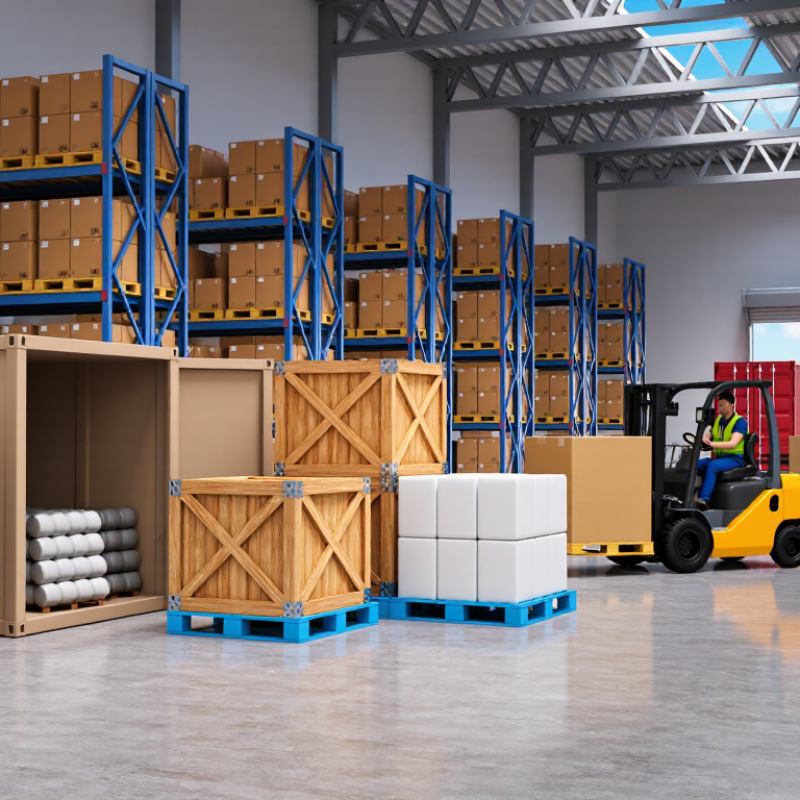
Shipping Requirements and Cargo Risk Assessment
Choosing industrial shipping boxes for global transport begins with the cargo, not the box. Weight, dimensions, center of gravity, and handling points determine the required structure. A dense metal component may need reinforced walls and strong corner protection. A sensitive instrument may need cushioning against vibration, shock, and sudden temperature changes.
Review the full shipping route before selecting materials. Sea freight can expose packages to humidity, salt air, and long storage periods. Air transport may involve pressure changes and repeated transfers. Warehouses create different risks. Forklift contact, stacking pressure, and uneven floors can damage poorly designed packaging. I usually rate each risk by likelihood and impact, then test the box against the highest risks.
Documentation also matters. Confirm package dimensions, gross weight, handling marks, and destination requirements before packing. Use moisture barriers when condensation is possible. Add internal blocking so cargo cannot shift inside the box. A small movement can become serious after thousands of kilometers.
Test it realistically.
A controlled drop test is useful, but it cannot represent every route. I once underestimated warehouse stacking pressure and focused too heavily on road vibration. That mistake changed our assessment process. Now, packaging reviews include transport history, carrier feedback, and photographs of damaged cargo. No checklist is perfect. A box that survives testing may still fail when loading conditions change. Reliable decisions come from repeated evaluation and honest attention to weak points.
Industrial Box Materials, Strength, and Construction Options
For global shipping, choose the box material according to weight, distance, and handling conditions. Heavy machinery often needs double-wall or triple-wall corrugated board. Plywood cases offer stronger protection for dense equipment and repeated handling. Plastic containers resist moisture, but they may increase cost and storage space. Material alone is not enough. A damp warehouse can weaken ordinary fiberboard within hours.
Strength depends on more than board thickness. Check edge crush strength, burst strength, and stacking performance. These measurements show how a box may behave under compression, impact, and vibration. A practical test is simple: load the packed box, stack similar cartons above it, and inspect crushed corners after several days. Small dents matter. They can become major failures during long transport.
Tips: Match the construction to the product’s weak points. Use reinforced corners for heavy internal parts. Add blocking when equipment can move inside the case. Leave no empty space around fragile surfaces. Moisture barriers help, but they do not replace proper sealing. For irregular loads, custom partitions may reduce movement better than extra cushioning. I have seen teams overbuild the outer box while ignoring internal shifting. That mistake wastes material and still allows damage. Review the complete package after a trial shipment, including lifting points, closure strength, and label visibility. A design that looks strong may perform poorly when workers drag it across a rough floor.
Choosing the Right Box Size, Design, and Internal Protection
Choosing the right industrial shipping box begins with accurate product measurements. Global shipping exposes packages to stacking, vibration, drops, and changing humidity. Measure length, width, height, weight, and fragile contact points before selecting a box. Then add enough clearance for internal protection, not excessive empty space. Too much room allows movement. Too little room transfers impact directly to the product.
Box design also affects handling performance. Heavy equipment often needs double-wall corrugated construction and reinforced bottom seams. Long products may require a narrow, rigid box with edge protection. Design for pallet placement, forklift access, and stable stacking. Avoid oversized cartons. They waste space and may collapse under top loads. I once chose a box based only on product dimensions. It fit, but the corner protection reduced usable space. That mistake changed my packing checklist.
Internal protection should match the product’s actual risks. Use molded supports, partitions, foam blocks, or suspension inserts to prevent shifting. Keep delicate surfaces away from box walls. Place dense components low and center the load. Moisture-sensitive items may need sealed inner wrapping and desiccant, where appropriate. Test a packed sample with drop, vibration, and compression checks before full production. Record the box dimensions, material grade, packing method, and test results. Small changes can alter performance. Recheck the design after supplier, product, or pallet changes. Sometimes the simplest insert is not the safest.
How to Choose Industrial Shipping Boxes for Global Shipping
Estimated air volumetric weight increases rapidly as box dimensions grow. Use compact box designs, select the smallest practical size, and add internal protection without leaving excessive empty space.
Calculation basis: volumetric weight = length × width × height ÷ 5,000, with dimensions measured in centimeters. The 5,000 divisor is a common air-freight planning standard; actual carrier rules may differ.
Global Compliance, Labeling, and Documentation Requirements
Choosing an industrial shipping box for global freight starts with compliance, not appearance. In my shipping audits, weak labels caused more delays than damaged cartons. Confirm destination rules before ordering a box. Box strength should match product weight, stacking height, moisture exposure, and transport mode. A double-wall carton may survive a warehouse stack, but not a wet transfer yard. Ask the supplier for burst, edge-crush, and drop-test records. Keep those records with the shipment file.
Labels must remain readable after rain, abrasion, and repeated handling. Print the consignee’s full name, address, contact details, package count, gross weight, dimensions, and country of origin when required. Use the destination language where local rules demand it. Handling marks should match the contents, not decorate the carton. For example, “Keep Dry” needs a protected, visible position. Barcode placement also matters; seams and corners can make scanners fail. A small mistake. Customs officers may compare the label with the invoice, packing list, and transport document. Mismatches invite questions.
Prepare a commercial invoice with accurate descriptions, quantities, values, currency, and tariff classification. Add origin statements or other certificates when the destination requires them. Check whether wood packaging needs compliant treatment marks. Rules differ by country and can change without much notice. I once treated a template as permanent; that assumption needed correction. Recheck carrier instructions, customs portals, and the importer’s requirements before sealing each box. Photograph the final label and record seal numbers, weights, and inspection results. Clear evidence helps resolve disputes when paperwork and cargo tell different stories.
Cost, Sustainability, and Final Box Selection Criteria
Choosing industrial shipping boxes for global transport starts with total cost, not the lowest unit price. In warehouse tests, a stronger box often reduced crushing, repacking, and delayed dispatches. Measure product weight, dimensions, stacking height, and moisture exposure before requesting quotations. Small details matter. A box needing extra void fill can erase its apparent savings. Compare purchase price, packing labor, pallet space, freight weight, and expected damage claims. Use supplier samples, then run compression and vibration checks with realistic loads.
Sustainability should be practical and measurable. Select right-sized boxes, recycled-content material where performance allows, and simple constructions using fewer components. Ask for material specifications and consistent quality data, not broad environmental promises. Lighter packaging may reduce transport emissions, but weak walls can create more waste through product loss. That trade-off is easy to miss. Consider whether local recycling systems accept the box after tape, labels, or wet exposure. I have seen well-intended packaging fail because it supported recycling, but not actual handling.
For final selection, score each candidate against protection, cost per delivered unit, sustainability, supplier reliability, and packing speed. Set minimum compression strength and maximum defect tolerance. Confirm repeatable dimensions across production batches. Keep one reserve design for seasonal humidity or heavier orders. It may seem inefficient. Yet one approved alternative can prevent urgent, expensive changes. Review results after real shipments, because laboratory performance is not the whole story. Document compromises and unresolved questions, so future teams can improve the process rather than repeat it.