2026 Best Food Bucket Types for Global Buyers?

Choosing the right food bucket in 2026 requires more than comparing prices or colors. Global buyers must examine material safety, sealing performance, stacking strength, and delivery conditions. A five-gallon bucket may look suitable, yet its lid can fail under warehouse pressure or temperature changes.

Dr. Aaron L. Brody, a respected food packaging specialist, has emphasized that “packaging must protect the product from production through consumption.” This principle guides our review. A reliable food bucket should resist moisture, odors, impact, and contamination while remaining practical for filling, transport, storage, and reuse.

Small details matter.

This guide compares the leading bucket types for grains, sauces, powders, frozen foods, and bulk ingredients. It considers polypropylene and HDPE construction, tamper-evident lids, airtight seals, handles, labels, and pallet efficiency. It also discusses export packaging, because a container that performs well locally may struggle during long-distance shipping.

Not every “food-grade” claim tells the complete story. Buyers should request migration documents, supplier testing records, and clear production specifications. Certification language can be confusing. Sometimes, the cheapest option becomes expensive after damaged lids, leaking contents, or poor stacking.

Our evaluation is practical, but not perfect. Market requirements vary by product, destination, and filling process. Readers should confirm current regional standards with qualified compliance professionals before purchasing. The best food bucket balances safety, durability, cost, and handling convenience without adding unnecessary material or complexity.
2026 Best Food Bucket Types for Global Buyers?

Food Bucket Basics: Materials, Sizes, Shapes, and Main Uses

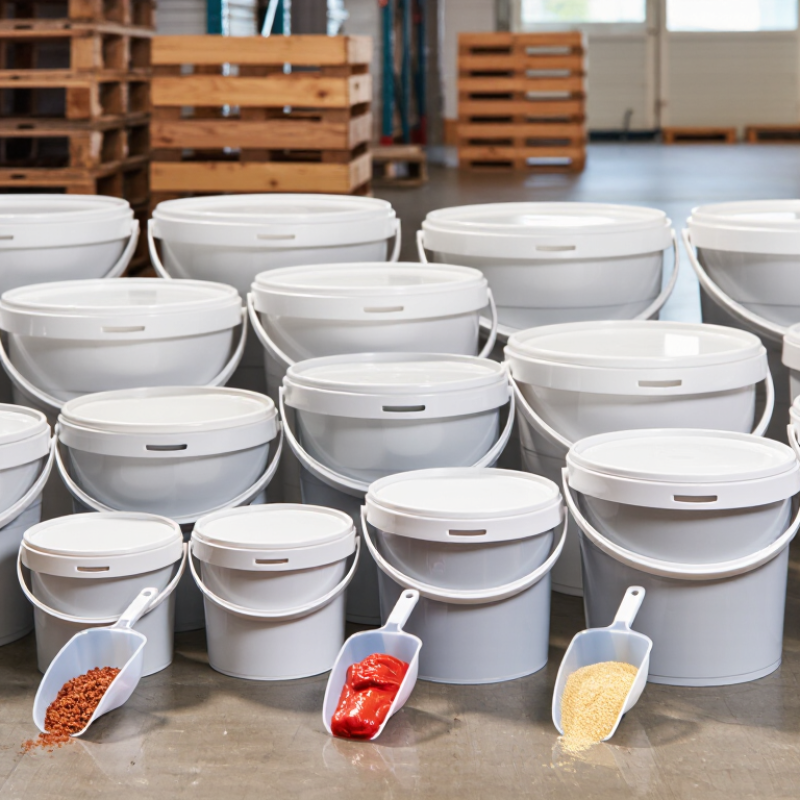
For global buyers, a food bucket is more than a container. Its material controls odor retention, stiffness, impact resistance, and recycling options. High-density polyethylene suits dry grains, flour, and powders because it handles routine impacts well. Polypropylene offers higher heat tolerance, useful for some hot-fill or processing applications. However, resin choice alone proves nothing. The container needs food-contact documentation, migration testing, and batch traceability for the intended market.

Sizes commonly range from small household pails to 20- or 25-litre industrial formats. Smaller buckets improve lifting and portion control. Larger ones reduce handling frequency, but loaded weight can become unsafe. Round shapes resist stacking pressure and pour smoothly. Square or rectangular shapes use warehouse space more efficiently. That sounds simple. In practice, lid fit and pallet pattern often matter more than nominal volume. A few millimetres of shoulder clearance can prevent damaged seals during transport.

UNEP’s Food Waste Index Report 2024 estimated 1.05 billion tonnes of food waste in 2022. The FAO Food Loss Index 2024 update places global food loss before retail at about 13.2 percent. These figures do not make packaging a complete solution, but they sharpen the use case. Tight lids help protect dry foods from moisture, dust, and pests; opaque walls can reduce light exposure. For sauces, pickles, or ingredients, buyers should verify temperature limits and closure performance. A perfectly universal bucket does not exist. I would test the filled unit, not just inspect an empty sample. Even careful specifications can miss warehouse drops, condensation, or awkward hand positions.

Key Food Safety Standards for Buckets in International Trade

2026 Best Food Bucket Types for Global Buyers?

For international food trade, bucket selection starts with food-contact safety, not color or price. A suitable bucket should use documented food-grade plastic, usually virgin HDPE or PP, with controlled additives. Recycled material may require extra approval in the destination market.

Buyers should request a declaration of compliance, resin details, batch records, and migration test reports. These reports should cover overall migration, specific substances, odor, and heavy-metal limits where applicable.

The lid, gasket, handle, and inner coating need equal attention. Food can touch more than the bucket wall. A tight lid reduces dust, moisture, and accidental contamination during storage.

However, strong sealing can trap condensation when warm products are packed too early. That risk deserves practical testing.

Sample-filled buckets should be checked through transport simulation, temperature changes, stacking pressure, and repeated opening.

A certificate alone is not enough.

Inspectors should compare the approved material with the actual production batch. They can review factory hygiene, pest control, cleaning records, and traceability codes.

HACCP-based controls and good manufacturing practices provide useful evidence of disciplined production.

No inspection system is perfect. A missed lid component or unclear test scope can create trouble at customs and during food filling.

Buyers should also confirm labeling, packaging waste rules, and food-contact requirements for every destination country. Requirements can change, and assumptions age quickly.

Comparing Plastic, Metal, Paper, and Biodegradable Food Buckets

Choosing a food bucket requires more than comparing price and appearance. Plastic buckets remain practical for sauces, grains, and dry ingredients because they are lightweight, stackable, and resistant to moisture. Food-grade polymers can also handle repeated transport without rusting or denting. However, buyers should verify food-contact compliance, temperature limits, and odor transfer before placing large orders.

Metal buckets provide strong protection against impact, light, and certain storage risks. They suit demanding logistics, especially when products need rigid walls. Their weight can increase freight costs, while exposed surfaces may dent or corrode if coatings fail. Paper buckets feel lighter and can support a more natural presentation. Still, condensation, oily foods, and rough handling may weaken the structure. From practical packaging checks, paper often needs a dependable inner barrier, not just attractive printing.

Biodegradable buckets deserve careful review. Some perform well only in certified industrial composting conditions, which are unavailable in many regions. The greener choice is not always the easiest one. Local waste systems, shelf life, sealing quality, and import requirements should guide the decision.

Tips: Test real food samples. Check lid fit. Measure stacking pressure. Ask for migration and material reports. Compare performance after cold storage, heat exposure, and transport vibration. A small pilot order may reveal problems that a specification sheet misses.

Choosing Bucket Features for Different Foods and Supply Chains

2026 Best Food Bucket Types for Global Buyers?

Choosing Bucket Features for Different Foods and Supply Chains

A food bucket should match the product, not just the purchase price. Dry ingredients need rigid walls, tight lids, and clean internal surfaces. Flour, grains, and powdered mixes can settle into small gaps. Smooth molding makes cleaning easier and reduces trapped residue. For sauces, oils, and wet foods, leak resistance matters more than extreme wall thickness. A secure gasket and controlled opening can prevent messy handling during storage and delivery.

Temperature changes affect bucket performance. Frozen foods may need plastic that stays less brittle in cold warehouses. Hot-filled products require containers designed for the expected filling temperature. Never assume one material handles every process. Check food-contact documentation, odor transfer data, closure performance, and stated temperature limits. For export shipments, stack strength and pallet stability also deserve close attention. A strong bucket can still fail when unevenly loaded for several weeks.

Supply chains create different priorities. Short local deliveries may favor reusable handles and easy manual carrying. Long ocean or road routes need consistent dimensions, nesting control, and lids that resist vibration. I have seen buyers focus on volume while overlooking empty-bucket storage costs. That mistake becomes expensive quickly. Batch traceability and supplier inspection records add practical reliability, especially when several factories are involved. No bucket is perfect. A small pilot test with the actual food, filling method, storage temperature, and transport conditions often reveals problems that product sheets miss.

2026 Global Buying Guide: Cost, Sustainability, and Supplier Evaluation

2026 Best Food Bucket Types for Global Buyers?

For global food buyers, bucket selection starts with the product, not the lowest quotation. Polypropylene buckets suit sauces, grains, and dry ingredients because they are light and stack efficiently. High-density polyethylene offers stronger impact resistance for chilled or wet products. Metal containers can protect sensitive contents, but they usually add weight, freight cost, and corrosion concerns.

A realistic 2026 cost review includes resin prices, tooling, lids, labels, transport, and rejected units. A cheap bucket may become expensive after leakage, damaged handles, or poor pallet stability. Test the handle. Small defects matter. Reusable designs can reduce packaging waste, but only when cleaning, reverse logistics, and local collection systems are practical. Recycled content also needs food-contact evidence and consistent supply. Sustainability claims without test records deserve caution.

Supplier evaluation should cover factory audits, material declarations, migration testing, batch traceability, and documented quality controls. Request samples from different production dates, not one carefully selected piece. Check lid fit after temperature changes, stacking strength, odor transfer, and print durability. I have found that communication speed often predicts problem-solving quality, although it is not a perfect measure. A supplier may provide excellent documents yet struggle with seasonal capacity. Buyers should verify production schedules, inspection methods, export packaging, and corrective-action records before placing large orders. Local compliance requirements still vary, so qualified regulatory advice remains necessary.

2026 Best Food Bucket Types for Global Buyers?

2026 Global Buying Guide: Cost, Sustainability, and Supplier Evaluation

Bucket Type Typical Food Applications Common Capacity Indicative 2026 Bulk Cost
USD / Unit
Recommended Reuse Sustainability Profile Temperature Considerations Key Buying Checks Overall Fit for Global Buyers
Food-grade PP plastic Pickles, sauces, dairy ingredients, dry foods, powders, confectionery 5–25 L $0.70–$3.50 5–20 cycles when designed for reuse Lightweight and widely recyclable where polypropylene collection exists. Recycled content may be restricted for direct food contact depending on local rules. Generally suitable for refrigerated and ambient foods. Many grades tolerate approximately 0°C to 100°C, but the exact limit must be confirmed for the selected resin and lid. Food-contact declaration, resin grade, lid gasket, stackability, handle strength, tamper evidence, migration testing, and batch consistency. Excellent
Food-grade HDPE plastic Flour, grains, syrups, sauces, oils, brines, bulk ingredients 5–30 L $0.80–$4.20 5–20 cycles when cleaned and inspected Durable, chemically resistant, and commonly accepted in rigid-plastic recycling streams. Recycling access varies substantially by destination country. Good performance in cold and ambient storage. Typical service limits are often around −40°C to 80°C, subject to the specific grade and application. Wall thickness, impact resistance, odor retention, closure torque, compatibility with oily or acidic foods, food-contact compliance, and pallet efficiency. Excellent
Recycled-content PP or HDPE Secondary packaging, non-sensitive dry foods, food-service collection, transport totes 5–25 L $0.85–$4.80 5–15 cycles, depending on contamination and wear Can reduce virgin-plastic demand, but recycled resin quality, traceability, odor, color, and food-contact authorization must be verified. Closed-loop use is preferable. Use only within the validated temperature range of the recycled resin and finished container. Avoid unapproved hot-fill applications. Verified recycled-content percentage, chain of custody, food-contact approval, contaminant controls, odor testing, mechanical performance, and audit records. Very good with controls
Tinplate steel bucket Edible oils, powders, dry ingredients, confectionery, processed foods 5–25 L $1.80–$7.50 Usually single-use for direct food packing; reusable for controlled logistics Steel has established recycling infrastructure in many markets and can provide strong barrier performance. Coatings and closures must be compatible with the food. Suitable for many ambient and heat-processing applications when the lining and seam design are validated. Corrosion risk increases with unsuitable acidic or salty foods. Internal coating, seam integrity, corrosion testing, vacuum or pressure requirements, dent resistance, net weight, closure safety, and coating compliance. Very good
Stainless-steel bucket Dairy processing, fermentation, food-service transport, high-value ingredients 5–30 L $18–$75 Hundreds of cycles with hygienic cleaning and inspection High initial material impact and cost, but long service life and high end-of-life metal value can improve lifecycle performance in returnable systems. Suitable for cold, ambient, and many hot-food processes. Thermal expansion, weld quality, and gasket limits must be validated. Steel grade, weld passivation, surface finish, cleanability, gasket material, hygienic design, traceability, inspection plan, and return-logistics cost. Best for closed-loop systems
Fiberboard or paper-based pail Dry powders, bakery ingredients, grains, pet-food ingredients, non-liquid products 5–20 L $1.20–$5.50 Normally single-use; limited reuse if dry and undamaged Potentially recyclable where the liner, adhesive, and local paper-recycling rules allow. Plastic or foil barriers can reduce fiber recovery. Best for dry, ambient products. Moisture, condensation, liquid filling, and high humidity can reduce strength and shelf-life performance. Liner composition, moisture-vapor barrier, compression strength, drop testing, food-contact declaration, adhesive chemistry, and recycling compatibility. Good for dry foods
Biobased or compostable polymer bucket Selected dry foods, promotional packaging, short-life applications 2–10 L $1.50–$6.50 Usually limited reuse unless specifically engineered for it Biobased content does not automatically mean compostable or recyclable. End-of-life benefits depend on certified material and actual local collection infrastructure. Often more sensitive to heat, humidity, and long-term storage than conventional PP or HDPE. Validate shelf-life and dimensional stability. Third-party certification, biobased percentage, composting conditions, food-contact approval, barrier performance, shelf-life testing, and disposal instructions. Application-dependent

Global Buying Notes

Cost ranges are indicative bulk purchasing estimates for standard unprinted units and can vary with resin or steel prices, order quantity, tooling, decoration, closure type, testing, freight, tariffs, and destination requirements. They are not firm quotations.

For direct food contact, request a current declaration of compliance and supporting migration-test documentation applicable to the destination market. Confirm requirements for materials, colorants, coatings, adhesives, recycled content, and closures before purchase.

Supplier evaluation should include a production sample, specification sheet, quality-management evidence, lot traceability, factory audit, incoming-material controls, dimensional inspection, leak testing, complaint procedure, lead time, minimum order quantity, and delivered-cost analysis.